
Primal movement sounds dramatic — sprinting, lifting heavy things, climbing — but the beginner version is deliberately undramatic. It starts with walking, adds simple bodyweight strength, includes carrying and everyday movement, and only later adds anything intense. This guide gives you the exercises, the form cues that keep them safe, and a weekly plan you can start this week without a gym, without equipment, and without needing to be fit already.
This is general information, not medical advice. If you have a health condition, are recovering from injury, have joint pain, take medication that affects exercise, or are pregnant, speak to your GP or a qualified physiotherapist before starting a new exercise routine. Stop any exercise that causes sharp pain, dizziness or chest pain, and seek medical advice if those occur.
Source context: the primal movement pyramid
The primal movement model, from Mark Sisson's framework, is a pyramid. The wide base is frequent, low-level movement all day: walking, standing, gardening, housework, cycling for short trips. The middle layer is strength work two or three times a week: lifting heavy things, including your own bodyweight. The small top is occasional brief, intense effort: sprinting or hard intervals, perhaps once a week at most, and not at all for beginners. The pyramid matters because it tells you where to spend your time: most of it on walking and everyday movement, some of it on strength, and very little on intensity. Beginners who start at the top — with sprints or punishing workouts — usually get injured or give up; beginners who start at the base build a habit that lasts.
The central entity here is the beginner's week, not the athlete's programme. Every exercise below is chosen because it can be done at home, scaled to any fitness level, and progressed gradually.
Layer one: walking, done properly
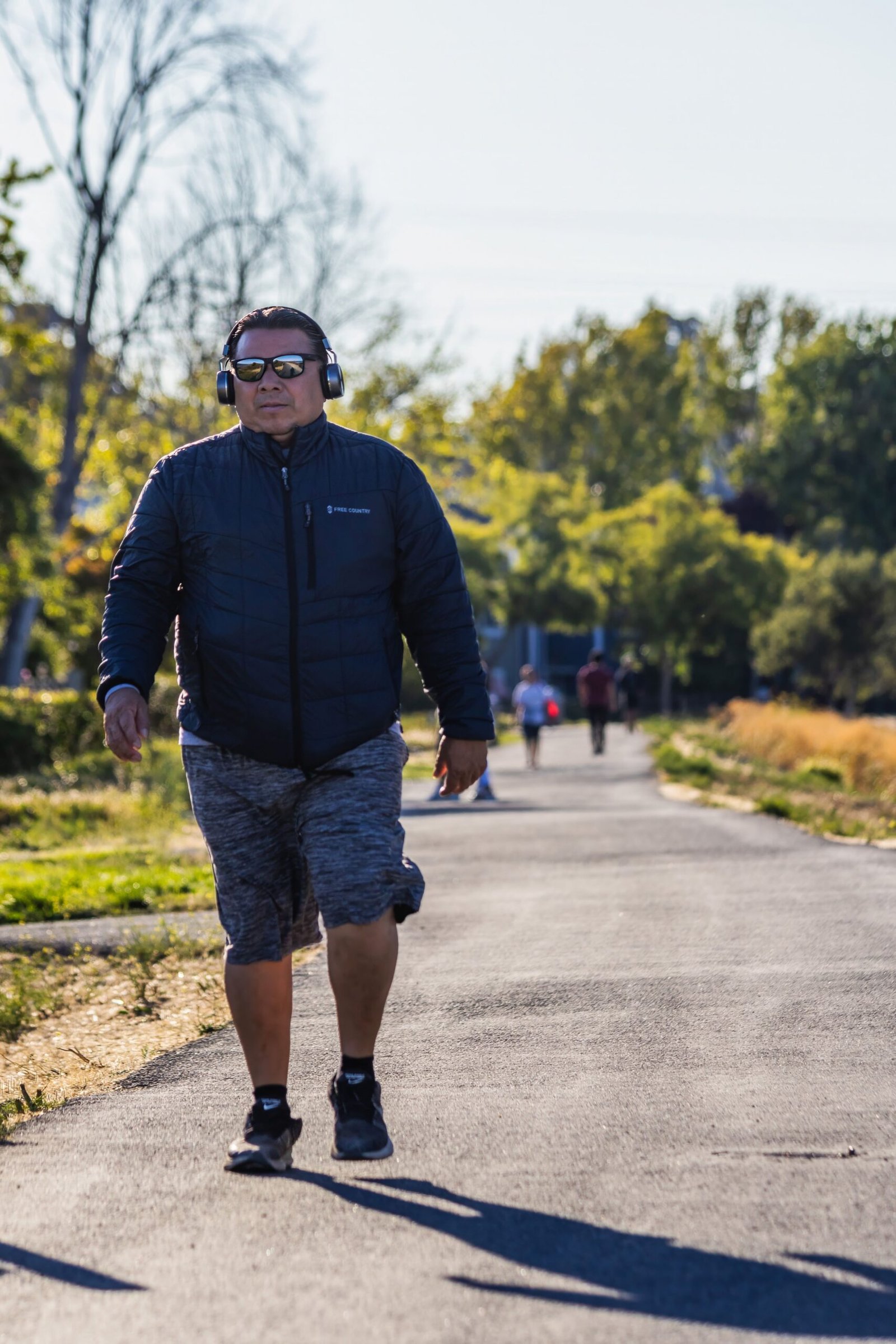
Walking is the foundation, and it deserves more attention than it usually gets. A brisk walk — fast enough that you can talk but not sing, with arms swinging and posture upright — is moderate-intensity exercise, and the NHS recommends adults aim for at least 150 minutes of moderate activity a week. Five 30-minute brisk walks meet that target, and shorter walks still count: three 10-minute walks in a day are as valid as one 30-minute walk.

Form cues for walking are simple: head up and eyes forward rather than down at a phone, shoulders relaxed and back, arms swinging naturally, and steps that land under your body rather than far ahead of it. Footwear should be comfortable and supportive; you do not need specialist walking boots for pavements and parks, though waterproof shoes and a jacket make UK walking in rain far more likely to happen.
Build walking into the day rather than adding it as a chore: walk to the shop instead of driving for small trips, get off the bus a stop early, walk during phone calls, take a lunchtime walk, and walk the dog a little further each week. If you are currently sedentary, start with 10 to 15 minutes a day and add five minutes a week until you reach 30 minutes most days. That gradual build is the whole secret — it avoids the soreness and discouragement that kills most new exercise habits.
Hiking and hill walking are the natural progression. A weekend walk on trails, in woods or over hills adds uneven ground, which works balance and leg strength, and it doubles as the sunlight and play pillars of the primal lifestyle. Start with flat, well-marked paths and build to hills over weeks, not in a single ambitious outing.
Layer two: bodyweight strength for beginners
Strength work is the middle layer, and bodyweight exercises are the beginner's gym. The programme below covers the major movement patterns — squat, hinge, push, pull, carry and core — with one or two exercises each. Do them two or three times a week, on non-consecutive days, with a day of rest or walking between sessions.

Squats are the fundamental leg exercise. Stand with feet shoulder-width apart, toes slightly out, and sit back and down as if into a chair, keeping your chest up and knees tracking over your toes, then stand back up. Beginners can squat to a chair — sit down fully, then stand without using your hands — and progress to free squats as strength improves. Aim for two to three sets of eight to twelve repetitions, resting a minute between sets.
Wall press-ups are the beginner's push exercise. Stand facing a wall, place your hands on it at shoulder height and width, step back, and bend your elbows to bring your chest towards the wall, then push back. As you get stronger, move to a lower surface — a kitchen counter, then a sturdy table, then the floor on your knees, then full press-ups. The progression matters more than the starting point: a wall press-up done well builds the same pattern as a floor press-up.
Glute bridges are a gentle hip and back exercise. Lie on your back with knees bent and feet flat, press through your heels to lift your hips until your body forms a straight line from shoulders to knees, pause, and lower slowly. They strengthen the glutes and hamstrings without loading the knees, and they are a good starting point for people with knee discomfort — though persistent knee pain should be checked by a professional rather than exercised through.
Dead bugs and bird-dogs are the beginner's core exercises, and they are safer than sit-ups for most people. For a dead bug, lie on your back with arms up and knees bent at right angles, then slowly extend one arm and the opposite leg towards the floor without letting your lower back arch, and return. For a bird-dog, start on hands and knees, extend one arm and the opposite leg until level, hold briefly, and return. Both train the core as a stabiliser, which is its real job, rather than as a muscle to be crunched repeatedly.
Pulling is the hardest pattern to train without equipment, since it needs something to pull against. A sturdy table row — lying under a heavy table, gripping its edge and pulling your chest towards it — works if the table is stable and heavy. A resistance band, which costs a few pounds, opens up rows, pull-aparts and assisted exercises, and is a worthwhile early purchase. If you have access to a park with bars, a dead hang — simply hanging from a bar with arms straight — builds grip and shoulder stability and is a first step towards pull-ups, which are an advanced goal, not a beginner requirement.
Carrying is the most primal exercise of all and the easiest to add: carry heavy shopping bags, a loaded rucksack, or a pair of water bottles or dumbbells for a set distance. The farmer's carry — walking while holding a weight in each hand — builds grip, core, posture and endurance at once. Start with a comfortable weight for 30 to 60 seconds of walking, rest, and repeat two or three times.
Layer three: play, balance and flexibility
Play is movement that does not feel like training, and it is the part of primal movement most likely to survive a busy life. Dancing, playing with children or dogs, a casual game of football or badminton, swimming, cycling for fun and gardening all count, and they work different muscles and coordination than structured exercise. Aim for at least one playful activity a week, not as a duty but as something you actually enjoy — enjoyment is what makes it repeatable.
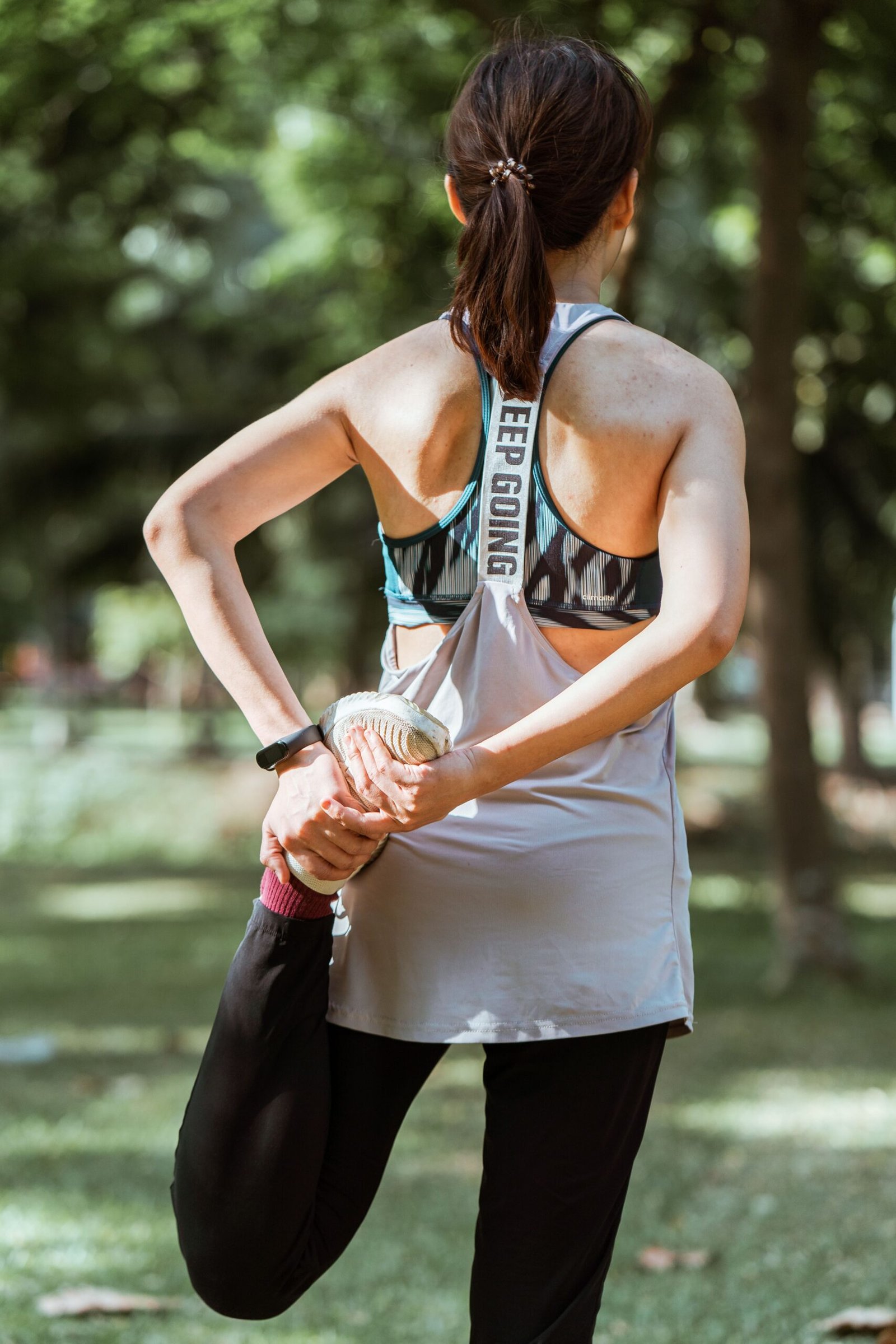
Balance and flexibility deserve a few minutes in every session, especially for older beginners. Standing on one leg while brushing your teeth, heel-to-toe walking along a line, and gentle stretching after exercise all improve balance and reduce fall risk. Yoga and Pilates classes, widely available in the UK through councils, community centres and online, are good structured options for flexibility, balance and core strength, and they suit beginners well.
Stretching after exercise should be gentle and brief: hold each stretch for 20 to 30 seconds without bouncing, breathing normally, and stop if it hurts. Stretching is not a warm-up — warm up with five minutes of easy walking or marching on the spot before strength work, and stretch afterwards when muscles are warm.
What about sprinting?
Sprinting is the top of the pyramid and is not a beginner exercise. In primal terms it means brief, all-out effort — a few short sprints with full recovery between them — and it carries a real injury risk for unprepared legs, especially hamstrings and calves. Beginners should not sprint until they have several weeks of regular walking and strength work behind them, can walk briskly for 30 minutes comfortably, and have no current leg or joint problems.
When you are ready, the safe introduction is not sprinting at all but faster intervals: walk briskly for three minutes, jog gently for one minute, repeat a few times, and build the jogging intervals gradually. Hill walking, cycling intervals and swimming intervals are lower-impact ways to add intensity before running sprints. Always warm up thoroughly, run on soft, even ground such as grass rather than concrete, stop if anything pulls or feels sharp, and keep the total intense time short — a few minutes of hard effort is the point, not a long, exhausting session.
A beginner weekly plan
Here is a simple first-month plan. Monday: 20 to 30-minute brisk walk. Tuesday: strength session (squats, wall press-ups, glute bridges, dead bugs, farmer's carry), about 20 to 30 minutes including warm-up. Wednesday: 20 to 30-minute walk or a playful activity. Thursday: rest or a gentle walk. Friday: strength session, same as Tuesday. Saturday: a longer walk, hike or playful activity, 45 minutes or more if you enjoy it. Sunday: rest or a gentle walk. Each week, add a few minutes to the walks or a repetition or two to the strength exercises, but not both at once — progress one thing at a time.
After a month, most beginners find the routine comfortable and can progress: longer walks, lower press-up surfaces, more sets, heavier carries, or a first gentle interval session. The goal at every stage is consistency over intensity. Missing a session is not failure; missing a week and returning is the normal pattern, and the routine should be easy enough to return to after a break.
Common beginner mistakes
The most common mistake is doing too much too soon: a first session that leaves you unable to walk for three days teaches you to dread the second session. Start easier than you think you need to, and finish feeling that you could have done a little more. The second mistake is poor form under fatigue: when an exercise gets hard, stop the set rather than letting your back round, your knees collapse or your shoulders hunch. The third is skipping warm-ups and rest days, both of which prevent injury. The fourth is comparing yourself with other people, online or in a class — your starting point is yours, and progress from it is what counts. And the fifth is treating exercise as punishment for food, which poisons both: movement in the primal framework is something your body is built for and enjoys, not a penalty for eating.
FAQ
How many days a week should a beginner exercise?
Aim for daily walking plus two or three strength sessions a week on non-consecutive days. That pattern meets the NHS moderate-activity guidance and builds strength without overtraining. Rest days are part of the programme, not laziness.
Do I need equipment to start primal movement?
No. Walking and bodyweight exercises need nothing. A resistance band, costing a few pounds, is the single most useful early purchase for pulling exercises. Dumbbells or kettlebells become useful later, once bodyweight exercises feel easy.
Are press-ups and squats safe for beginners?
Yes, when scaled properly — wall press-ups and chair squats are the beginner versions, and form matters more than depth or repetitions. Stop if you feel sharp pain, and seek professional advice for persistent joint pain rather than pushing through it.
When can I start sprinting?
After several weeks of consistent walking and strength work, when you can walk briskly for 30 minutes comfortably and have no leg or joint problems. Start with gentle jog intervals rather than all-out sprints, on soft ground, with a full warm-up.
Related reading
- Primal Diet Plan for Beginners UK: Complete Guide
- Primal Lifestyle Guide: Movement, Sleep, Sunlight
- Primal Sleep Habits Guide
- Primal Diet on a Budget UK: Costs in £
- Paleo Diet Side Effects First Week: What to Expect